
Services Overview
Stainless Steel Prep Equipment Buying Guide for EU, Middle East
How to choose CE stainless steel prep tables, sink cabinets and bowl cabinets for EU, Middle East and North Africa foodservice projects.
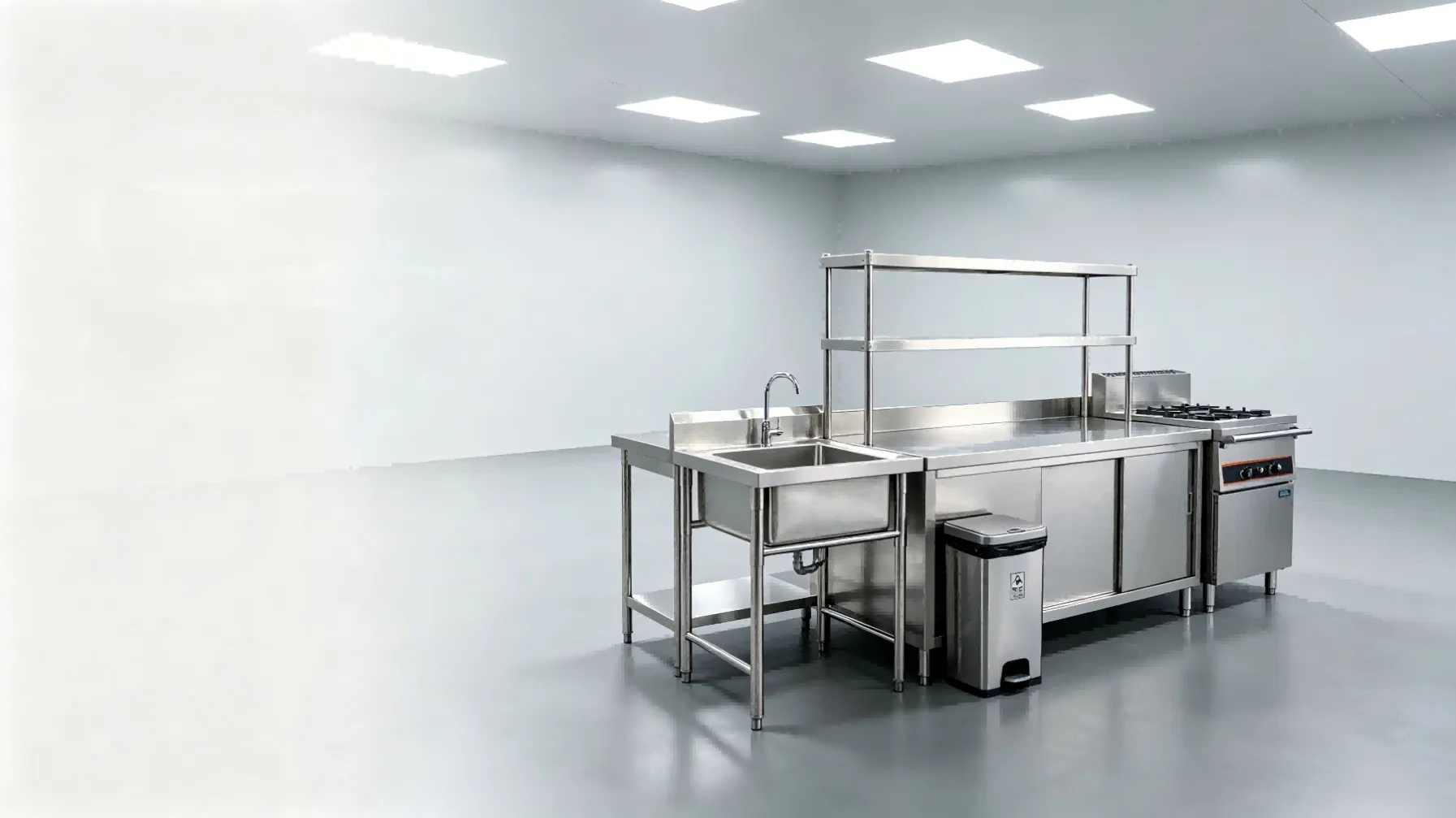
Stainless Steel Prep Equipment Buying Guide for EU, Middle East
Commercial kitchens across the EU, MENA and North Africa all face one common issue: they need hygienic prep workstations that can hold up in hot, humid or dusty conditions while keeping workflows smooth during busy service hours.
At Lead Kitchen Tech, we manufacture and export three main non-refrigerated stainless steel product lines for these markets: standard stainless worktables, sink cabinets and bowl/dish storage cabinets. We also offer refrigerated prep tables built with integrated stainless cabinet frames as an optional solution. This guide covers key points buyers, importers and project contractors should verify before placing orders — especially for kitchens exposed to high ambient heat, coastal humidity, heavy repeated cleaning, or multi-site chain rollouts.
1. Understand your actual kitchen environment first
For EU kitchens, ventilation and daily HACCP cleaning routines are usually the main design considerations. For GCC, North Africa and Mediterranean coastal areas, heat, humidity, salt-laden air, dust and water quality become bigger concerns.
Confirm these details before selecting products:
- Maximum ambient temperature: For hot kitchens, specify stainless construction built to withstand high temperatures.
- Humidity and dust exposure: Sealed hardware and corrosion-resistant fittings are critical.
- Cleaning chemicals: Skip low-grade stainless steel if sanitizers, citrus cleaners, vinegar or high-salt food prep are used regularly.
- Sink cabinet water conditions: Check drain size, overflow design, faucet cutout layout and grease / food waste handling.
- Local compliance rules: Confirm regional requirements before mass production.
2. Prioritise corrosion resistance over cosmetic appearance when selecting stainless steel
For food-contact surfaces and export-grade durability, grade 304 stainless steel is the baseline for worktops, sink basins, cabinet fronts and exposed panels. It outperforms cheaper steel in wet prep zones, coastal salt air and repeated washdown scenarios.
Ask suppliers for clear specifications:
- Material grade: Clarify where 304 and 201 stainless will be applied.
- Sheet thickness for tops, cabinet bodies, sink basins, doors, drawers and undershelves.
- Surface finish: #4 brushed finish is standard; hairline or mirror finishes are available for front-of-house use.
- Welding quality: Smooth welds, polished seams, no sharp burrs; coved corners preferred where possible.
- Sink cabinets: Deep-drawn or welded basins, properly radiused corners for easy cleaning, anti-condensation treatment when needed.
- Export anti-corrosion protection: VCI packaging, desiccants, panel separators and edge guards.
For MENA and coastal EU projects, cheaper steel with identical dimensions often results in warranty claims. Use 304 stainless on critical wet zones and put the agreed mixed-material zones in writing.
3. Standard prep tables & bowl cabinets: built for heavy daily use
Stainless worktables, wall shelves, bowl and dish storage cabinets may look simple, but small design details directly impact labour efficiency.
Useful optional features:
- Adjustable undershelves for GN pans, containers or packaged stock.
- Splashback height tailored for hygiene and splash control.
- Full-extension drawer slides for easy access.
- Bowl cabinets sized to match your container or basket dimensions.
- Adjustable feet or castors; lockable castors recommended for cleaning and maintenance.
- Knock-down / flat-pack designs only if your installer can guarantee structural stability and hygienic sealing.
For hotels, central kitchens, cloud kitchens and commissaries, plan a matched stainless steel zone: prep table → sink cabinet → storage cabinet → wall shelf, with consistent depth, finish and hardware.
4. CE documentation and regional compliance
Strong competitiveness in the EU market relies on a complete document package for every RFQ. For CE-compliant products, prepare:
- Declaration of Conformity
- Food contact material statements for gaskets, boards and contact surfaces
- Nameplate, wiring diagram (for optional electric models), installation manuals and safety warnings
- Spare parts list and recommended service intervals
- English manual as standard; French and Arabic versions available for North Africa / MENA.
CE certification alone is not enough for non-EU MENA markets. Saudi Arabia, GCC countries, Egypt, Morocco, Algeria and other territories may require import registration, SASO/SABER, G-Mark or local standards depending on the product and buyer type. Check all requirements with your importer before shipment.
5. OEM & project supply: what experienced buyers look for
Distributors, importers and chain project clients expect the factory to act as a supply partner, not just a vendor.
Confirm these points with [Brand] or any supplier:
- OEM/ODM scope: private labelling, carton marking, manual language and custom dimensions.
- Lead times: standard production lead time, custom order lead time and shipment tracking milestones.
- QC process: incoming material inspection, weld inspection, final functional tests and pre-shipment photos/videos.
- Packaging: export cartons or wooden crates, moisture protection, corner guards, spare parts kits and container loading plans.
- Mixed container loading: combine prep tables, sink cabinets, bowl cabinets and accessories in one shipment.
- Warranty & aftersales: response time, remote video troubleshooting and spare parts dispatch.
6. RFQ template for EU / MENA buyers
Share these details upfront to cut down back-and-forth emails:
- Installation country and city
- Product type: worktable / sink cabinet / bowl cabinet (refrigerated prep table optional)
- Dimensions, GN pan quantity, door/drawer layout and splashback height
- Kitchen ambient conditions, humidity and cleaning regime
- Required documents: CE pack, food contact statement, test reports, spare parts list
- Order quantity, destination port, target lead time and OEM/private label requirements
- Project type: standalone restaurant, hotel, cloud kitchen, central kitchen or national chain rollout
Final Recommendation
When sourcing stainless steel prep equipment for EU, Middle East and North Africa projects, the lowest price is not the best selection criteria. Your equipment must withstand heat and humidity, use food-grade 304 stainless for wet areas, meet full hygiene standards, come with complete CE paperwork, export-grade packaging and practical after-sales support for your importer.
Request a quote: send your target market, drawings or reference photos, quantity and required delivery date. We will prepare product comparisons, CE document checklists, OEM options, lead time schedules and container loading plans.